About
I work with individuals of all identities, backgrounds, and orientations. I am of Southeast Asian lineage and identify as a daughter of Cambodian and Iu-Mien refugees.
My area of expertise is working with communities of color, first, second or third generation adult children of immigrants or refugees, and individuals that identify with multicultural identities.
As a woman of color, I understand the feelings of wanting to develop cultural identity and the overwhelming need to develop your own sense of self. I have experienced the stressors related to living and navigating the complexity of family expectations, culture, and dominant society. I understand the impact of marginalization and systematic oppression. Most importantly, I understand the benefits of finding a non-judgemental space where you can truly honor who you really are, to be seen and heard. A space to sort through demands and stressors of everyday life, relationships, and cultural identity/BIPOC-specific challenges.
As a therapist of color, I strive to create an affirming space where healing and growth feel possible. My approach is warm and relational, offering support that is compassionate, gentle, and direct.
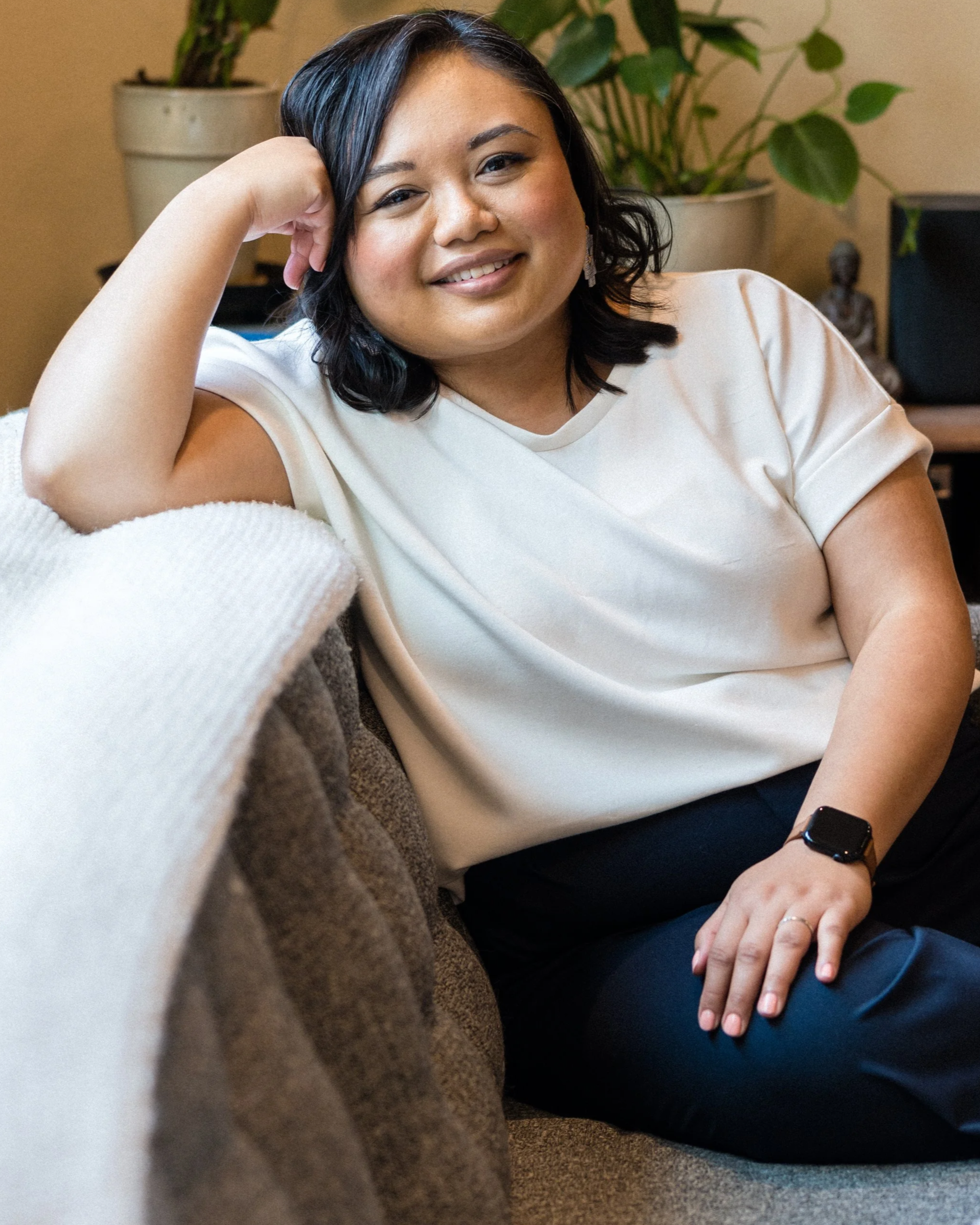
Hi, I’m La (she/her).
What is therapy?
Therapy is a process, and growth takes time. Sometimes it happens gradually, and at times it can feel slow. Along the way, therapy can be validating, freeing, and empowering but it can also bring up difficult emotions or memories. It’s normal to feel things like sadness, anger, frustration, or worry, and sometimes people feel worse before they start to feel better.
Therapy is a space where you can be open and honest about your life, explore challenges, and learn healthier ways to cope. There’s no guaranteed outcome, and everyone’s experience is different. What you get out of therapy often depends on your commitment to the process. Therapy is collaborative, and we both play an important role in the work.
Areas I can help with:
Anxiety and depression
Improving self-esteem, self-worth, and self-compassion
Stress management and burnout prevention
Exploring cultural identities and experiences
Navigating intergenerational trauma
Addressing the impact of marginalization and systematic oppression
Coping with the complexities of living within dominant cultural norms
Cultivating mind-body awareness for emotional and physical well-being
Relationship and communication challenges
Life Transitions and personal growth
Understanding guilt and shame through a cultural lens
Supporting eldest daughters navigating culturally-rooted family roles
My Approach
In our work together, I take a thoughtful, integrative approach to therapy, shaped around your unique needs and goals. I aim to offer a warm, collaborative space where you feel supported, respected, and understood. My work is grounded in social justice informed practices and anti-oppressive framework. The approaches I may draw from include:
Internal Family Systems (IFS Institute Level 1 trained- Global Majority Focused)
Narrative Therapy
Somatic Therapy (Somatic Experiencing Institute: Beginning Level Completed, currently completing Intermediate level)
Attachment Informed
Culturally Sensitive and Responsive Care
Mindfulness and Self-Compassion
My Professional Journey
I have spent many years working in medical clinics and hospitals, community mental health settings, and domestic violence programs. Along the way, I’ve had the honor of supporting people from many different backgrounds and life experiences, including individuals who identify as LGBTQIA+, BIPOC, immigrants, and refugees.
Professional Licensure
Licensed Independent Social Worker, Washington #LW61287356
Licensed Clinical Social Worker, Oregon #L10900
Educational Background
Master of Social Worker, Eastern Washington University, 2015
Bachelors in Psychology and Social Sciences, Portland State University, 2005